


Boosting Business Performance Through Scientific Insights
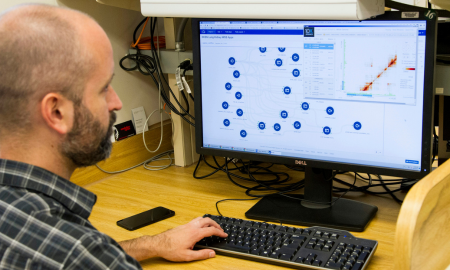
In today's super competitive market, relying on intuition and past experience just isn't enough for success anymore. Businesses everywhere are finding that a more rigorous, evidence-based approach can really boost performance.
By borrowing ideas from the world of science, companies can fine-tune how they operate, spark new ideas, and build stronger teams. This shift towards a scientific way of thinking isn't about ditching business smarts; it's about adding verifiable data and structured experiments to them.
The Data-Driven Business Advantage
At its heart, a scientific approach to business means making decisions based on data, not just gut feelings. This involves systematically gathering and analysing information from every part of your operation.
Think customer interactions, sales figures, supply chain efficiency, and how well your marketing campaigns are doing. Real data-driven decision-making turns those abstract numbers into practical insights you can use.
For example, a retail company might look at purchasing patterns to get its stock levels just right. This ensures popular items are always there, while also avoiding too much of what doesn't sell as fast.
Similarly, a software company could track how users engage with its product. This helps them figure out which features people love and which ones cause headaches, guiding what they develop next. This method takes out the guesswork. It lets you put resources where they're needed most, directly tackling real business needs and opportunities with confidence.
Applying Research Principles to Operations
The scientific method offers a powerful way to improve how things get done internally. It encourages a cycle of observing, forming a hypothesis, experimenting, and analysing. You can apply this to any business function. Instead of making a big, expensive change based on a hunch, you can test your ideas on a smaller scale first.
Imagine a company that thinks a new customer service script will make customers happier. Instead of giving it to everyone, they could run an A/B test. One group of agents keeps using the old script, while another tries the new one. By comparing customer feedback and how long it takes to resolve issues between the two groups, the company gets solid proof of whether the new script actually works better.
This experimental mindset turns improving your business into a systematic, low-risk process of constant refinement.
Innovation Powered by Pure Research
Big innovations rarely just happen by chance. They're often the result of investing in fundamental research over the long term. While it might seem far removed from daily business, exploring scientific frontiers can lead to completely new products, materials, and technologies that reshape entire markets.
Industries from tech to health and wellness depend on this pipeline of discovery. Pure research into areas like materials science or biochemistry, for instance, can uncover novel compounds and molecules like peptides. These then become the foundation for entirely new product lines.
By supporting or staying connected to the world of pure research, businesses can get a head start and build a base for future growth that competitors will struggle to copy.
Optimising Team Productivity and Well-being
Scientific insights aren't just for technology and data; they're just as valuable for understanding the human side of your business. Fields like organisational psychology and behavioural science offer tons of evidence on what makes teams productive, creative, and resilient. This research can influence everything from office design to how managers lead.
Studies have shown, for example, how things like natural light, flexible work options, and clear communication can noticeably affect employee satisfaction and output. Instead of sticking to old management ideas, leaders can use these insights to create a work environment that's scientifically optimised for both performance and well-being. This creates a positive loop where happy, healthy employees are more engaged and effective in their roles.
Translating Lab Insights to Market Strategy
Ultimately, the goal is to take all these insights from customer data, operational experiments, and scientific research and turn them into a clear market strategy. This is where predictive analytics becomes a crucial tool. By using statistical algorithms on past data, businesses can forecast future trends, anticipate shifts in how consumers behave, and spot potential market disruptions before they hit.
For example, a company can use predictive models to identify customers who might leave and proactively offer them incentives to stay. In another case, a manufacturer might analyse market data to predict demand for a new product, which helps guide production and marketing budgets. By leveraging predictive analytics, businesses stop just reacting to the market and start actively shaping it, gaining a powerful strategic edge.
Embracing a scientific mindset helps a business build a culture of curiosity, evidence, and continuous improvement. It gives you the tools not just to solve today's problems, but also to anticipate and get ready for tomorrow's opportunities.
Image via Unsplash.

