


Optimising Parking and Traffic Flow for Businesses
The first and last impression a visitor has of your business isn't in the reception area; it’s in your car park. A chaotic, poorly managed parking area can create frustration before a client even steps through the door.
On the other hand, a well-organised system for traffic and parking reflects professionalism and care, setting a positive tone for every interaction that follows. Optimising this often-overlooked part of your premises isn't just about convenience; it's a strategic move that impacts safety, efficiency, and your bottom line.
The Impact of Poor Parking Management
A disorganised car park is more than just a minor inconvenience. For customers, it can be the reason they choose a competitor. For staff, it can be a source of daily stress, leading to lateness and decreased morale. The chaos can also create genuine safety risks, with unclear traffic flow increasing the likelihood of accidents involving vehicles or pedestrians.
Beyond the reputational damage, there's a direct financial cost. Studies exploring the potential economic impact of parking issues highlight how inefficient use of space and time translates into tangible losses for businesses and the local economy.
Improving Customer and Staff Experience
A positive parking experience shows you value people's time and safety. Simple changes can make a significant difference. Clearly marking visitor bays near the entrance makes clients feel welcome and prioritised. For employees, a guaranteed or well-managed parking system removes a major source of morning anxiety.
Consider implementing a permit system or designated zones to ensure fairness and order. Well-lit walkways and clear signage not only improve safety but also contribute to a feeling of security, particularly for those arriving early or leaving late. It’s a simple investment in the wellbeing of everyone who visits your site.
Tools for Effective Traffic Control
Managing the flow of vehicles effectively requires the right tools. These can range from simple, low-cost options to more robust security solutions. Speed bumps, for example, are highly effective at controlling vehicle speed in areas with high pedestrian traffic. Clear, reflective signage is essential for directing drivers and indicating one-way systems or restricted areas.
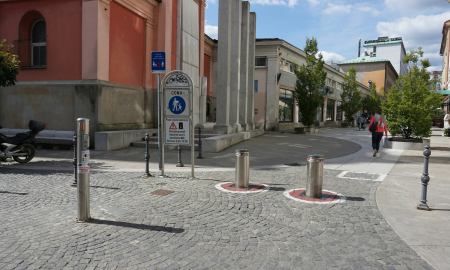
For businesses needing to manage access to private or staff-only zones, physical barriers are essential. Modern solutions offer a blend of security and convenience. For instance, specialists in access control like bollardsecurity.co.uk provide heavy-duty telescopic bollards that can be raised to block entry when needed and lowered to allow authorised vehicles to pass. These tools help enforce your parking policies automatically, preventing unauthorised parking and keeping designated areas clear without constant staff supervision.
Designing an Efficient Layout
The physical design of your car park is the foundation of good traffic management. An efficient layout maximises the number of available spaces while ensuring safe and logical movement. Angled parking bays are often easier for drivers to enter and exit than 90-degree bays, which can speed up turnover and reduce the chance of minor collisions. A one-way system is one of the most effective ways to prevent congestion and head-on conflicts.
Crucially, your design must clearly separate vehicle routes from pedestrian walkways. Use painted lines, raised kerbs, or barriers to create safe paths from the car park to the building entrance. Effective parking space management isn't just about fitting in more cars; it’s about creating a system that is intuitive, safe, and efficient for everyone.
Future-Proofing Your Premises
The way we use vehicles is changing, and your car park should be ready to adapt. When planning or redesigning your layout, think about future needs. The rise of electric vehicles (EVs) means that installing charging stations is becoming less of a perk and more of an expectation. Allocating spaces and planning the necessary infrastructure now will save significant cost and disruption later.
Furthermore, smart parking technology, such as sensor systems that guide drivers to empty bays via a mobile app, can dramatically improve efficiency and user experience. Building flexibility into your design allows you to adapt to these trends and maintain a modern, functional facility for years to come.
Treating your car park as a critical business asset is a shift in perspective that pays dividends. By focusing on smart design, clear communication, and effective tools, you create a safer, more efficient, and welcoming environment for employees and customers alike.
Image source: Marek Lumi via Unsplash.

