


Navigating The Future: A Comprehensive Guide To Business Financial Forecasting
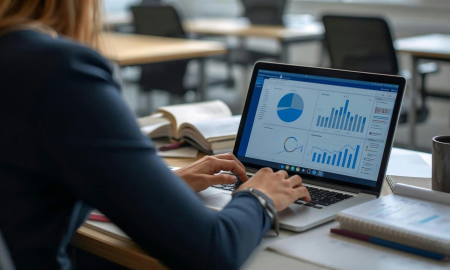
If your business isn't running with a financial forecast, you're potentially putting yourself at a lot of risk. It's like driving a car at night without the lights on. You can't really see where you're going.
Knowing what your company or business model is capable of is essential before you start investing time, resources, and effort into it. You might have an idea that your gardening business or your accountancy firm is scalable and that it can become highly profitable, but the reality could be quite different once you do the analysis
The difference between accounting and forecasting
For many entrepreneurs, accounting and forecasting are the same thing, but accounting is essentially retrospective. It's backward-looking, so it takes into consideration the cash flow position of your business up until that point.
While that might look good, it's not the same as forecasting. Even if you're growing at 10% per month in the early months of your business, that doesn't mean the same logic will necessarily apply to the future. Forecasting is all about trying to figure out what's going to happen next, which means it's forward-looking. Sometimes forecasting can use historical data as grounding, but that's not always the case.
What does a solid forecast look like?
FP&A software uses various solid forecasting principles to get an accurate picture of what the future will look like. One element of solid forecasts is revenue projections. They take into consideration the money that's already coming into the business, its growth rates, and then project down from there what is likely to be made in 6, 12, or 18 months' time.
They also try to measure expenses and the cost of goods sold. Fixed costs, like salaries and rents, are usually quite easy to predict, whereas variable costs, including shipping and materials, can be a bit trickier. Gathering all this information allows software to predict future margins and therefore future profitability.
There are also cash flow projections. Knowing exactly how much cash is going to be coming into the business at any given time in the future is essential to ensure that free cash flow is available for purchasing stock and inventory and paying wages.
Why forecasting is no longer negotiable
Forecasting seems high-tech, which is one of the reasons many small businesses don't bother with it. They think it's something that's only really used by enterprise firms, but it's critical for a number of reasons:
- It enables proactive risk management. If you're able to model different scenarios, you can see how your company's finances and resources will react to each of them should they occur. You can't predict the future, so the next best thing you can do is create contingency plans for when things go wrong, and that's exactly what forecasting enables.
- Forecasting is essential for getting capital. People are less likely to invest in your business unless you're able to show them what you think the revenue generation might be in the future. The higher the revenue generation, the better off you'll be.
Image source: Apex Virtual Education via Unsplash.

