


How To Make Your Warehouse More Efficient
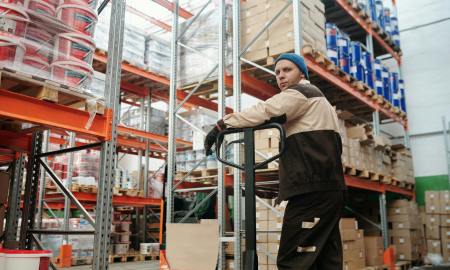
What is it that’s making your warehouse feel (or actually be) less efficient than it should be or than you need it to be? Don’t answer right now because it’s highly unlikely to be something you can accurately put your finger on, and it could be all kinds of things combining to make things harder for you, your workers, and your business. The first thing you’ll need to do is to step back and look at how things are being done and what’s being moved where. That way, you’ll see where the delays are happening, where staff are doing too much or too little, and even if there are areas that are crammed full and other places that are sitting empty, and so on. And once you know where the issues are, it’s far easier to sort them out. With that in mind, here are some useful tips on how to make your warehouse more efficient.
Rethink Your Layout Before Adding More
It’s tempting to just assume you just need more storage, but the fact is that quite often the problem is how the current space is being used. In the end, a layout that worked a year ago might not make much sense now, especially if your stock levels or perhaps the types of things you’re selling have changed.
That’s where a lot of people realise they haven’t actually maximised my warehouse space in the way they thought they had - their shelving might be too spread out, routes around the place might not be totally logical, and there could be awkward gaps that no one really uses, and so on.
Sometimes small things like repositioning fast-moving items closer to packing areas or grouping similar products together can make a massive difference, and you don’t even have to add anything new.
Make Picking And Packing Easier
Picking and packing is where a lot of time gets lost, but you probably won’t notice it because things are being done in the way they’ve always been done. It’s only when you change how those things are done for the better that you’ll see just how much time was spent searching for items, walking long distances, dealing with unclear labels, and other things that slow it all down.
Clear organisation helps more than anything here, meaning you’ll want to have labels that are easy to read, consistent storage systems, and an overall logical system and structure that help your team do their work in the fastest and most accurate way possible.
It’s also worth looking at whether your packing stations are set up properly - having everything within reach, from packing materials to tools, keeps things moving much better and there’ll be fewer pauses which, even if they’re only short, can really add up to a lot of lost time.
Use Vertical Space Properly
One of the most overlooked areas in a warehouse is actually the space above eye level. After all, most of the time you’ll be focusing on floor space because that’s what you interact with most, but vertical storage can make a big difference… if it’s used well.
Adding higher racking or making better use of existing shelving, for example, can free up room below and reduce clutter. Of course, it needs to be practical and safe, but when it’s done properly, it can completely change how much usable space you’ve got.
It also helps to separate slower-moving stock from items that need to be accessed on a regular basis, and that’s going to keep the main working areas a lot clearer as well.
Keep Things Moving With Better Systems
Efficiency isn’t just about physical space - it’s also about how information is handled. For example, if your stock levels aren’t right or systems are outdated, it’s going to create delays that ripple through the whole business and cause plenty of extra work and problems that you just don’t need.
You can invest in some simple digital tools to solve a lot of these problems, and it’s definitely worthwhile. You could have real-time stock tracking in place, for example, barcode systems, clearer reporting, and so on, and it will all help to reduce mistakes and save time. In the end, the ultimate goal should be to make every step in every process as simple as possible because the more complicated things are, the less efficient they tend to be.
Don’t Ignore The Smaller Frustrations
A lot of the time, the biggest improvements come from fixing the things that seem so small they shouldn’t have a lot of thought go into them. But a poorly placed workstation, a problem that keeps causing people to waste time (even seconds), or perhaps unclear signage, for example, can really slow people down.
These things might not even come up in feedback and so on because people are just used to them, which is why it’s wise to spend time observing how things are done - if there’s a work around happening, find out why and fix the underlying issue, and you should find not only can you save time and become more efficient, but your team will be happier and more productive too.
Build Habits That Keep It Efficient
Once things are running better, the next challenge is keeping them that way. The issue is that warehouses do tend to change over time as stock changes, processes increase or decrease, and new pressures pop up that have to be handled.
So that’s why it’s good to make regular checks, small adjustments where necessary, and generally be aware of how the space is being used because that can all help stop things from slipping back into old patterns. Just a few little changes here and there can be enough to keep you efficient and it shows you’re paying attention, which is always good for business.
Final Thoughts
Making a warehouse more efficient should be at the top of your to do list - if you want a better, more successful business, your warehouse has to be as efficient as possible to allow that to happen. However, although it might seem like a daunting task, the points above show it’s not as hard as you might think, and the sooner you get started, the sooner you’ll be running smoothly.
Image source: Tiger Lily via Pexels.

